4 min read
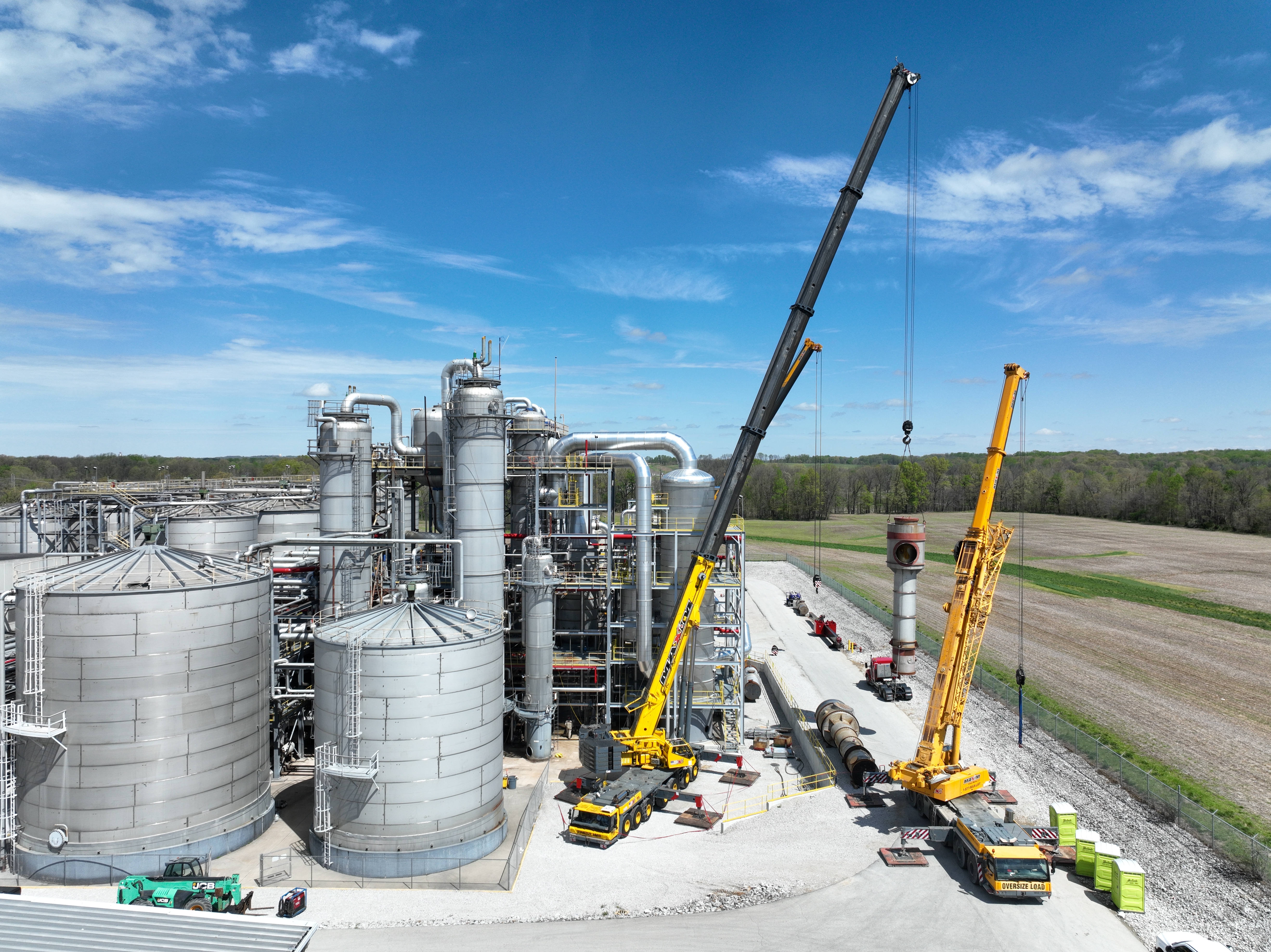
How MIG replaced 80,000-pound heat exchangers inside a congested ethanol plant and kept a critical turnaround moving despite high winds and a challenging lift.
Replacing an 80,000-pound heat exchanger is difficult enough.
Doing it in the middle of an ethanol plant's distillation area, surrounded by operating equipment and flammable process conditions, with no clear crane path and a shutdown schedule measured in days, changes the job entirely.
That was the challenge facing Maddox Industrial Group (MIG) during a recent heat exchanger replacement project at an Indiana biorefinery.
The scope included a vertical hanging shell and tube heat exchanger and an approximately 80,000-pound horizontal unit. The vertical exchanger could be handled with a conventional large crane pick.
The horizontal exchanger was different.
It sat deep inside the distillation area, surrounded by equipment that could not simply be removed to make room for a crane. And every additional day the exchangers remained out of service meant another day of lost production.
MIG had five days to get the exchangers turned over.
An 80,000-Pound Heat Exchanger With No Clear Way Out
The location of the horizontal exchanger created the defining challenge of the project.
A conventional crane configuration could not simply reach into the structure, pick up the exchanger and putt it out. The surrounding equipment had to remain in place, which meant MIG needed another way to reach the unit.
The solution came from Texas.
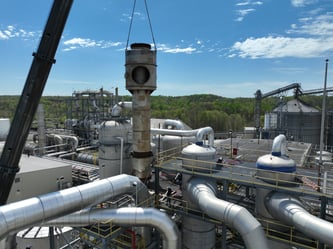
MIG brought in a specialized counterbalance beam, a piece of rigging equipment so uncommon in the region that this was only the second time it had been used in Indiana.
The beam extended the crane's reach into the center of the distillation area. From there, the crew could rig the horizontal exchanger in position, disconnect its associated piping and extract the approximately 80,000-pound unit without dismantling the equipment around it.
What initially looked like a problem of crane access became a carefully engineered rigging solution.
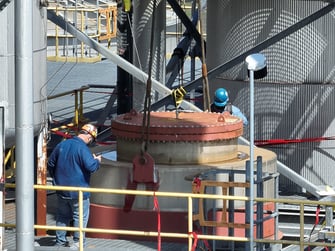
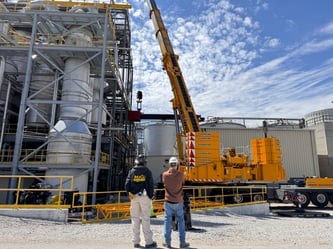
Heat Exchanger Replacement Inside a Flammable Process Area
Getting the exchanger out was the only part of the challenge.
The work was taking place where the plant produces nearly 200-proof alcohol. That meant flammable vapor risk and strict controls around line breaks and hot work.
Before work began in an affected area, the crew verified that the system was completely drained. Every line was walked and every potential pocket was checked. The process went all the way down to rinsing traps in the floor drains to confirm alcohol was not present near the work area.
Two MIG superintendents coordinated directly with plant personnel throughout the project, one overseeing piping and the other rigging. Permits and line breaks were coordinated before each step, and no hot work took place in an affected area until the crew confirmed it was clear.
With the safety plan in place and the rigging challenge solved, the team still had one factor it could not control.
The weather.
Keeping an Ethanol Plant Turnaround Moving Through 70 MPH Winds
High winds repeatedly interrupted crane operations during the project, with gusts reaching 70 mph on the worst days.
An 80,000-pound exchanger could not be safely lifted in those conditions. Thunderstorms also forced the team down from elevated work more than once.
But a crane shutdown did not mean a project shutdown.
Whenever weather prevented lifting, MIG shifted the 30-person crew to work that could be completed safely at ground level. Once conditions allowed crane operations to resume, the team returned to the exchanger work.
That flexibility helped prevent weather delays from bringing the entire turnaround to a halt.
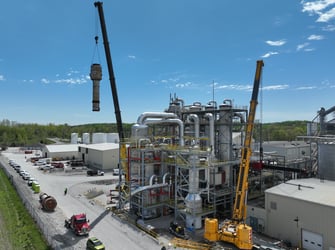
Five Days From Removal Through Startup Support
Despite the difficult access, flammable environment and repeated weather stand-downs, MIG turned the heat exchangers over in five days.
The 30-person crew handled removal, installation, process piping re-attachment, pressure testing and startup support. The project also included replacement of three additional smaller exchangers within the same congested distillation area.
The work required a 700-ton crane, 550-ton crane, 100-ton crane and the specialized counterbalance beam, all coordinated around a shutdown where every day mattered.
But this was not the first time MIG had been called to tackle this exchanger replacement.
Why the Biorefinery Called MIG Back
MIG had previously completed the same major exchanger replacement scope at the facility.
When the exchangers were later damaged in service, MIG returned first to help extend their operating life, plugging more than 400 tubes to keep the plant running. When replacement exchangers were eventually ordered, the facility turned to MIG again.
That relationship extends beyond these two projects.
MIG has supported the customer's facilities since 2013, giving its crews years of familiarity with the plants and the demands of working inside their process areas.
For a planned shutdown, that experience matters.
When an exchanger weighs 40 tons, access is limited, the process environment is flammable and production is waiting on the other side of the turnaround, replacing equipment is only part of the job.
The real challenge is planning how to do it safely, coordinating the people and equipment to make it happen, and adapting when conditions refuse to cooperate.
On this project, MIG did all three and turned the exchangers over in five days.
Frequently Asked Questions About Heat Exchanger Replacement
How does MIG replace large shell and tube heat exchangers in congested plants?
The lifting and rigging plan depends on the exchanger and facility. On this project, the horizontal exchanger was located deep within a congested distillation area with no clear crane path. MIG used a specialized counterbalance beam to extend the crane's reach and remove the approximately 80,000-pound exchanger without dismantling surrounding equipment.
Can MIG perform heat exchanger replacement during a plant turnaround?
Yes. MIG provides equipment installation and replacement services for industrial facilities. This project included exchanger removal and installation, process piping re-attachment, pressure testing and startup support within a five-day turnover.
How does MIG manage heat exchanger replacement in flammable environments?
The specific safety plan depends on the facility and process. During this ethanol project, MIG coordinated line breaks, permits and hot work directly with plant personnel. The system was completely drained and checked before hot work occurred in affected areas.
What happens when weather interrupts a critical crane lift?
Safe lifting conditions determine when crane operations can proceed. During this project, winds reached 70 mph and repeatedly stopped crane operations. MIG shifted its crew to ground-level work during those periods so other parts of the turnaround could continue progressing.
What industrial field services does MIG provide?
MIG capabilities include equipment installation and replacement, vessel and equipment maintenance, R-stamp repair and confined space rescue, along with specialized engineering, fabrication and construction services for industrial infrastructure.
Have a heat exchanger replacement or critical turnaround coming up? Talk with MIG about planning the removal, installation, and field execution before the shutdown clock starts.